Pricing your rental property wrong costs more than most investors realize. Set the rent too high and your unit sits empty for weeks, burning through your reserves. Price it too low and you quietly leave thousands of dollars on the table every single year, sometimes for the entire length of a lease.
According to data from Zillow Rentals, properties priced even 5% above market average sit vacant 40% longer than competitively priced units. That gap between asking too much and asking just right is where most rookie landlords lose serious money. This guide walks you through how to research, calculate, and confidently set rental prices that fill units fast and grow your cash flow.
Why Rental Price Matters More Than You Think
Rental pricing affects far more than your monthly bank deposit. It determines vacancy rates, tenant quality, refinancing options, and long term portfolio growth, which is why getting it right shapes your investing results for years.
Here’s the math most landlords ignore. One month of vacancy equals 8.3% of your annual rental income. If you price $100 too high and sit vacant for six extra weeks, you’ve lost more than a full year of that extra $100 would have brought in. Underpricing compounds in the opposite direction, because every renewal builds off your original number.
Beyond cash flow, your rent number directly impacts your DSCR (Debt Service Coverage Ratio), which lenders use to qualify investment property mortgages. A property generating strong, market-aligned rent is much easier to refinance or use as collateral for your next acquisition.
“Most landlords I work with leave $50 to $150 per month on the table because they never benchmarked against current comps. Over a 10-year hold, that’s $18,000 in lost income.” Sarah Chen, Property Manager, Phoenix AZ

Research Your Local Rental Market First
Before you pick a number, you need real data. Guessing based on what your mortgage costs or what the previous owner charged is how investors lose money for years without realizing it.
Use these tools to pull rental comps:
- Zillow Rent Estimate: Free, broad market view with neighborhood data
- Rentometer: Compares your address against nearby active listings
- Apartments.com: Strong for multifamily and apartment-style units
- RentCast: Detailed rent reports with historical trend data
- Local Facebook groups and Craigslist: Real-world pricing from independent landlords
Look at active listings (what owners are asking) and recently rented units (what tenants actually paid). The second number matters more, because asking prices often get negotiated down before a lease is signed.
Drill into the neighborhood level rather than the zip code. A property two blocks from a strong school zone can command $200 more than the same floor plan ten blocks away.
Factors That Affect Rental Pricing
Multiple variables shape what your unit can realistically rent for. Understanding these factors lets you justify your price to prospective tenants and adjust intelligently when the market shifts.
Property Specific Factors
- Square footage: The single biggest pricing variable
- Bedroom and bathroom count: 3/2 commands premium over 3/1 in most markets
- Property age and condition: Updated finishes can add 10-15% to rent
- Kitchen and bathroom updates: Best ROI for rent increases
- Amenities: In-unit laundry, dishwasher, parking, yard, central air
Location Specific Factors
- School district rating: Especially critical for single family rentals
- Walkability and transit access: Major factor in urban markets
- Crime statistics: Tenants research this before applying
- Distance to employment centers: Drives demand and pricing tier
- Neighborhood trajectory: Up and coming areas often outperform comps within 12 months
Market Conditions
Seasonal timing matters more than most landlords think. Summer months (May through August) consistently produce 15 to 20% more rental inquiries than winter months. Listing the same property in February versus June can mean a $75 to $150 difference in achieved rent.
Local job growth, population trends, and the supply of competing rentals all push prices up or down. When interest rates rise and fewer people can buy homes, rental demand spikes, which is exactly what happened across most US markets between 2022 and 2024.
The 1% Rule and Other Pricing Formulas
Real estate investors use a few quick rules to evaluate whether a property’s rent makes financial sense. These aren’t perfect pricing tools, but they’re useful sanity checks for deal evaluation.
- 1% Rule: Monthly rent should equal at least 1% of the property’s purchase price
- 2% Rule: More aggressive target for cash flow markets like the Midwest and South
- Gross Rent Multiplier (GRM): Property price divided by annual rent (lower is better for investors)
- 50% Rule: Expect 50% of rental income to go toward operating expenses
These formulas help you evaluate deals before buying, but they should never override actual local market data when setting prices on a property you already own. The market decides what tenants will pay, not a formula on a spreadsheet.
How to Calculate the Right Rent Price
Here’s the step-by-step process that experienced investors use to price every rental confidently. Following this same framework on every property keeps your decisions consistent and data-driven.
- Pull 5 to 10 comparable rentals within a 1-mile radius from the last 90 days
- Filter for similar size, bedrooms, bathrooms, and condition
- Adjust for differences: Add $50 for in-unit laundry, subtract $75 for no parking, etc.
- Calculate the average adjusted rent across your comps
- Check your operating costs: Mortgage, taxes, insurance, maintenance reserves
- Set your price within the top 25% to 50% of the comp range, depending on condition
Starting slightly above your target gives you negotiating room. If the unit doesn’t get strong interest in 10 to 14 days, drop the price by 3 to 5% rather than letting it sit vacant for another month.
Common Pricing Mistakes Landlords Make
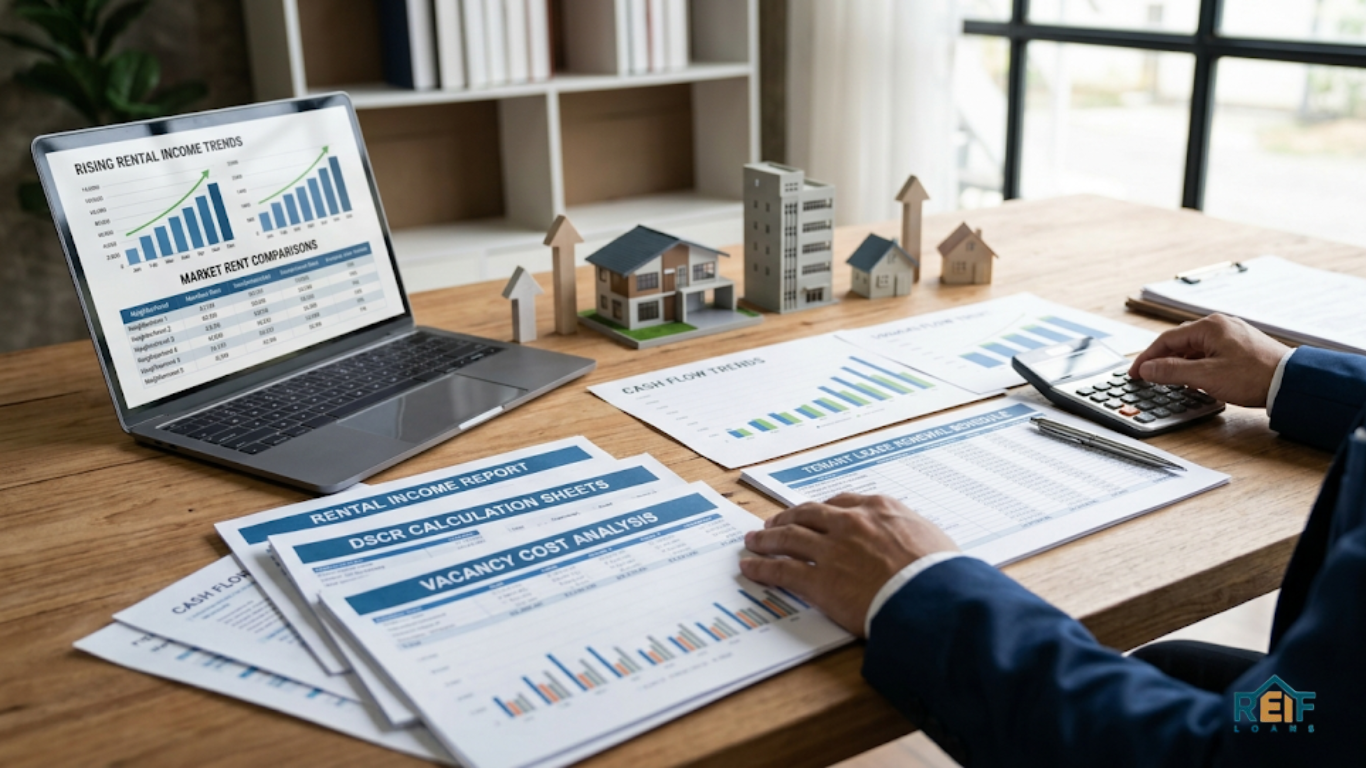
These mistakes cost landlords thousands of dollars every year, and most are completely avoidable with a simple pricing framework.
- Pricing based on your mortgage payment: The market doesn’t care what you owe
- Ignoring local comps: Gut feelings lose to data every time
- Overvaluing personal upgrades: That $30,000 renovation rarely justifies a $300 rent bump
- Refusing to adjust after extended vacancy: Two weeks of no inquiries means your price is wrong
- Pricing too low to fill fast: You’ll attract problem tenants and lock in lower rent for years
- Failing to raise rent annually: Static rent over 5 years equals 15-20% lost income to inflation
“The biggest pricing trap I see is landlords who set rent in year one and never touch it. Five years later they’re $300 below market and convinced they can’t raise it without losing the tenant.” Marcus Walker, Real Estate Investor, Cleveland OH
When and How to Raise Rent
Annual rent reviews should be standard practice for every landlord. Most markets support 3 to 5% increases without losing good tenants, especially when communicated well in advance with clear context.
Steps for raising rent the right way:
- Check local rent control laws before announcing any increase
- Give 60 to 90 days written notice even when not legally required
- Compare to current market rate so the increase looks reasonable
- Reinforce the value of staying (no moving costs, known neighborhood, good landlord)
- Be open to a smaller increase if the tenant is high-quality and reliable
The cost of replacing a tenant (vacancy, turnover, screening, repairs) often exceeds $3,000. A reliable tenant paying $50 below market is frequently worth more than a new tenant at full price.
How Rental Pricing Affects Your Financing
Accurate rental pricing directly impacts your ability to grow your portfolio. Lenders look at the income your property generates to qualify you for a new mortgages, refinances, and cash-out opportunities.
When you price your rental correctly, you build a strong DSCR ratio that qualifies you for Real Estate Property DSCR Loans from Real Estate Investor Friendly Loans, which approve investors based on property cash flow rather than personal income. This matters most for investors with multiple properties or those whose tax returns don’t show full earning power because of write-offs and depreciation.
Strong rental income also opens up cash-out refinance options. Pulling equity from a well-priced rental gives you capital for your next deal without selling the property or affecting your other financing arrangements.
Price Smart and Build a Portfolio That Compounds
Setting rental prices isn’t guesswork. It’s a process of research, comparison, and adjustment based on what the market actually pays right now. The investors who win long term are the ones who treat pricing like a business decision, not an emotional one. Price too high and you bleed cash from vacancy. Price too low and you bleed cash from missed income every single month.
At Real Estate Investor Friendly Loans, we work with real estate investors across 43 states who need financing built around how rental properties actually perform. Whether you need a Real Estate Property DSCR Loan that qualifies on rental income, a cash-out refinance to pull equity from a strong-performing unit, or non QM financing for a complex deal, our team understands the numbers behind real investing.
Call us at (248) 416-2564 or visit reifloans.com to get pre-qualified and grow your rental portfolio with financing that fits the way you actually do business.