Owning a rental property changes how you think about insurance. The house is no longer just a place to live; it’s a cash flow asset, a liability exposure, and often the collateral on a mortgage that has to keep performing month after month.
A single fire, a slip-and-fall lawsuit, or three months of unpaid rent during repairs can erase years of profit. Standard homeowners insurance won’t help here, and if your insurer finds out the property is rented, your claim can be denied outright.
What Is Landlord Insurance and Why Homeowners Insurance Won’t Cut It
Landlord insurance, sometimes called a dwelling fire policy or rental property insurance, is built specifically for properties you rent out instead of live in. It protects three things at once: the structure, your liability as the owner, and the rental income the property generates.
Homeowners’ policies are written under the assumption that the owner occupies the home. The moment a tenant moves in, the risk profile changes, and most home insurers will refuse the claim or cancel the policy if they discover an undisclosed rental. If you financed through a Real Estate Property DSCR Loans or commercial mortgage with Real Estate Investor Friendly Loans, your lender will also require a landlord policy on the closing checklist.

Core Coverages Every Landlord Should Carry
These coverages form the foundation of every solid landlord policy. Skip any of them and a major part of your investment sits exposed:
- Dwelling coverage. Pays to repair or rebuild the structure after fire, windstorm, hail, or burst pipes. Always pick replacement cost over actual cash value so depreciation doesn’t leave you short after a major loss.
- Liability protection. Covers bodily injury or property damage claims from tenants or visitors, including legal defense costs. Most landlords carry $300,000 to $1 million in limits.
- Loss of rental income. Pays your rent while the property sits uninhabitable due to a covered loss, keeping cash flow steady during repairs.
- Other structures. Detached garages, sheds, fences, and pool houses, usually capped at 10 percent of the dwelling limit.
- Landlord-owned personal property. Appliances, lawn equipment, and furniture you keep on site. Does not cover anything the tenant owns.
For investors with multiple properties or higher rent ranges, $1 million in liability should be the floor, with an umbrella policy stacked on top of the base coverage.
Optional Coverages Worth the Extra Premium
The base policy handles the big stuff, but experienced investors layer in extras based on the property and the local risk profile. These add-ons close gaps that standard policies leave wide open:
- Flood insurance. Standard policies exclude flood damage entirely. Required by lenders in FEMA flood zones, and worth carrying even in low-risk areas.
- Earthquake coverage. A separate endorsement in most states, mandatory for serious California portfolios.
- Ordinance or law coverage. Pays the cost of bringing repairs up to current building code after a claim. Critical for properties built before the 1990s.
- Vandalism and malicious damage by tenants. Standard policies often exclude intentional damage caused by tenants. This rider closes that gap.
- Rent guarantee insurance. Covers a portion of rent if a tenant defaults or skips out mid-lease.
- Umbrella policy. Adds $1 to $5 million in liability coverage across your entire portfolio for a few hundred dollars per year.
Each add-on is a small premium increase against a potentially catastrophic out-of-pocket loss. Run the math on each one based on where your property sits and how much rent it produces.
DP-1, DP-2, DP-3: Picking the Right Policy Form
Landlord policies come in three forms, and the difference matters more than most new investors realize. The right one depends on how long you plan to hold the property, what kind of tenant occupies it, and how much risk you’re willing to retain personally.
Here’s how the three tiers compare:
- DP-1 (Basic). Covers a short list of named perils such as fire, lightning, and explosion. Pays actual cash value, meaning depreciation is subtracted. Cheapest option, often used for vacant or distressed properties.
- DP-2 (Broad). Adds more named perils including weight of snow, falling objects, and accidental water discharge. Pays replacement cost on the structure.
- DP-3 (Special). Open perils on the dwelling, meaning everything is covered except what’s specifically excluded. Standard choice for serious buy-and-hold investors.
“For any rental property you intend to hold long term, DP-3 should be the default starting point,” says Marcus Reilly, an independent insurance broker who works with real estate investors. “DP-1 might save you a few hundred dollars a year, but it leaves so many perils uncovered that one claim can flip the math against you.”
Short-term rental owners need extra attention here, since most standard DP-3 forms exclude or limit Airbnb-style use without a specialized endorsement.
How Much Does Landlord Insurance Cost?
Landlord insurance typically runs 15 to 25 percent more than a comparable homeowners policy on the same property. National averages land between $1,200 and $2,000 per year for a single-family rental, though real numbers swing widely based on the specific risk.
These are the main factors carriers look at when pricing your policy:
- Property location and natural disaster exposure
- Age, roof condition, and construction type
- Coverage limits and deductible amount
- Your prior claims history as an owner
- Long-term lease versus short-term rental use
- Number of units in the building
If you own several rentals, ask your broker about a portfolio policy or commercial package that bundles every property under one master agreement. The savings compound across a growing portfolio, and you collapse multiple renewal dates into a single one.
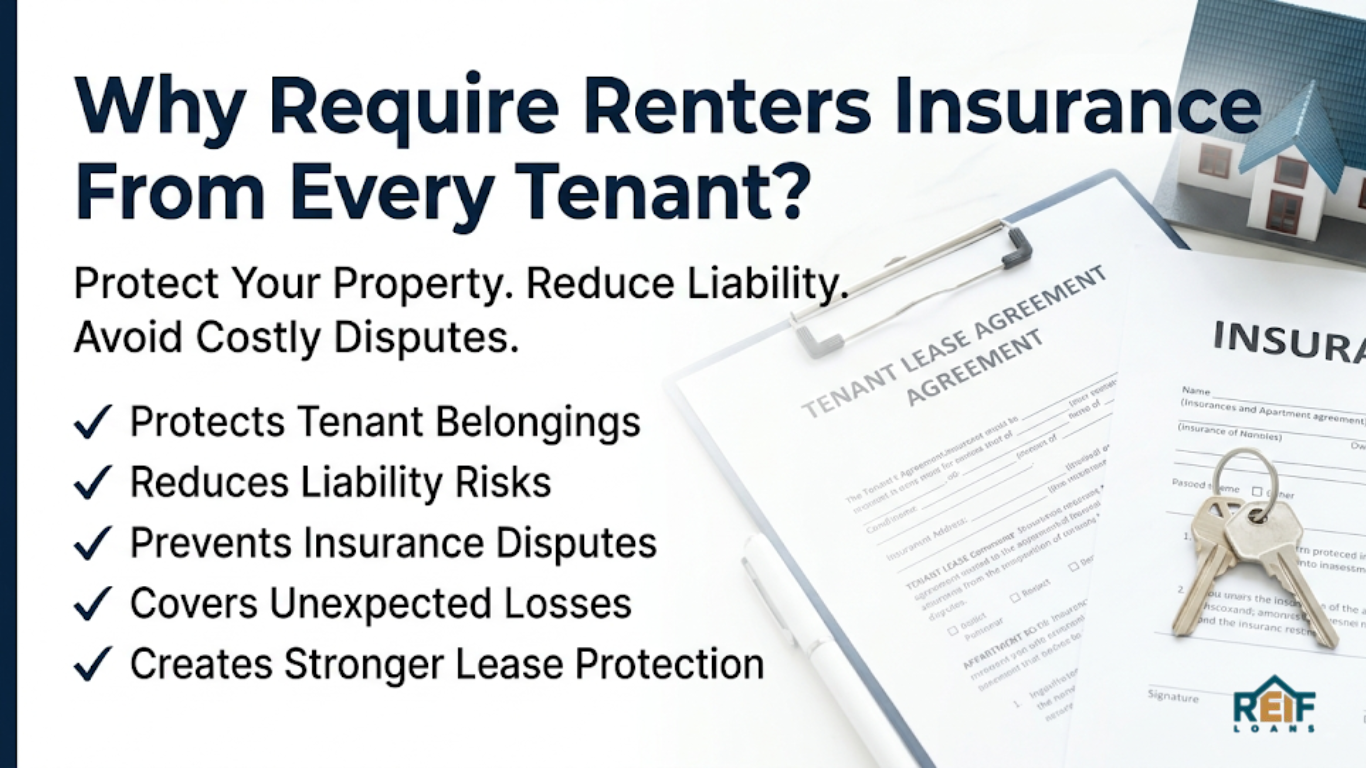
Why You Should Require Renters Insurance From Every Tenant
Your landlord policy stops at the walls of the property. Anything the tenant owns, furniture, electronics, clothing, is not your responsibility and is not covered under any landlord policy.
Requiring renters insurance in the lease does two important things for you as the owner:
- Shifts responsibility for tenant belongings back onto the tenant
- Adds a second layer of liability protection when a tenant damages your unit or a neighbor’s
- Cuts down on disputes after fires, water leaks, or break-ins
A $15 a month renters policy saves both sides from nasty disputes, and most professional landlords now make proof of coverage a condition of move-in.
Common Mistakes Landlords Make With Insurance
Even investors who buy the right policy often misuse it in ways that cost them at claim time. Watch out for these recurring traps:
- Underinsuring the dwelling. Insuring for market value instead of replacement cost. Rebuild costs are usually higher than purchase price in older neighborhoods.
- Letting the policy lapse during vacancies. Most policies restrict or void coverage if the unit sits vacant for 30 or 60 days. Add a vacancy endorsement before listing.
- Failing to disclose short-term rentals. Listing the property on Airbnb without telling your carrier can void the policy entirely.
- Skipping liability stacking. Carrying $300,000 on a property in a high-litigation state is asking for trouble. Bump to $1 million plus an umbrella.
- Forgetting to update after renovations. A new kitchen, finished basement, or added bathroom raises the replacement cost. Update your dwelling limit accordingly.
A quick annual review with your broker catches almost all of these before they turn into a denied claim.
Securing the Asset Sets Up the Next Investment
The right landlord insurance does more than satisfy a lender or check a box on closing day. It keeps your cash flow intact when something goes wrong, protects your personal assets from a lawsuit, and lets you sleep at night with tenants living in your property.
Once your current rental is fully protected, the next move is usually growth. Many investors use a cash out refinance for investors on a stabilized property to fund the down payment on the next deal, or move directly into a new acquisition with a Real Estate Property DSCR Loans sized to the property’s rental income. Real Estate Investor Friendly Loans structures investor-friendly investment property mortgages across 43 states so your next deal closes as cleanly as the insurance got bound.