
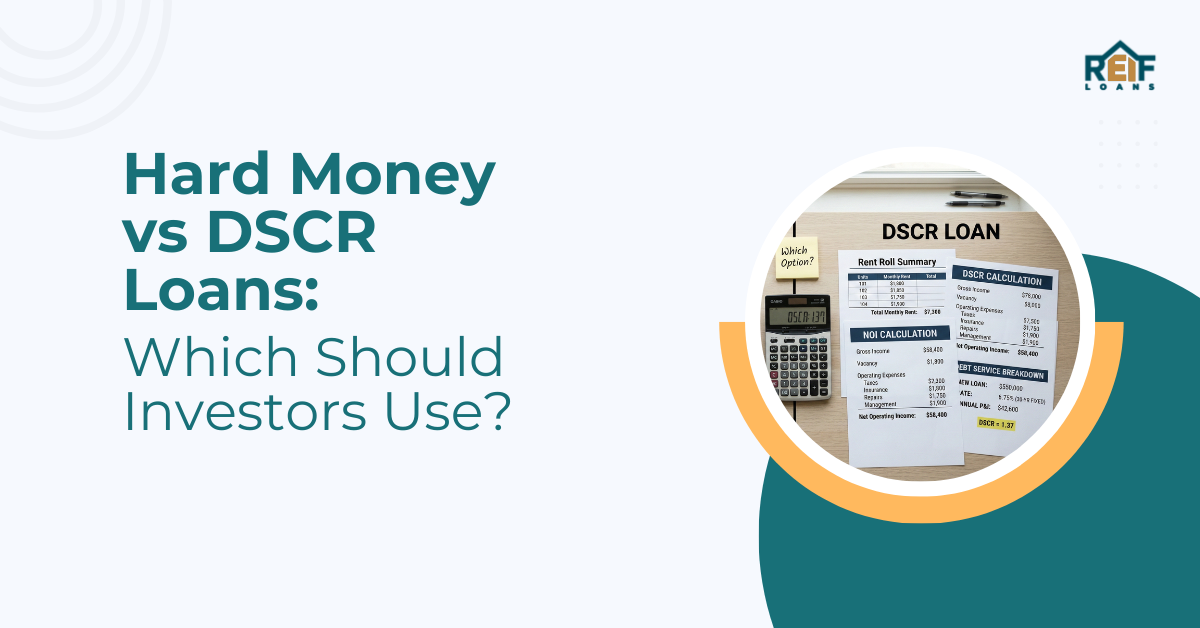
Every real estate investor hits a point where they need financing that actually fits their strategy. Two of the most common options are Hard Money Vs DSCR Loans, and picking the wrong one can cost you thousands or even kill a deal entirely.
At Real Estate Investor Friendly Loans, we work with investors across Michigan and 43 states who face this decision regularly. Both mortgage types serve very different purposes, and understanding when to use each one is what separates smart investors from the rest.
Key Takeaways
- Real Estate Property DSCR Loans are built for long-term rental property investors who want stable financing based on property income rather than personal tax returns.
- Hard money mortgage are short-term, asset-based mortgage designed for speed, commonly used for fix-and-flip projects and bridge financing.
- The right choice depends on your investment timeline, exit strategy, and whether the property is already producing rental income.
- Many experienced investors use both mortgage types at different stages of the same deal.
Real Estate Property DSCR Loans vs Hard Money Loans: Quick Comparison Table
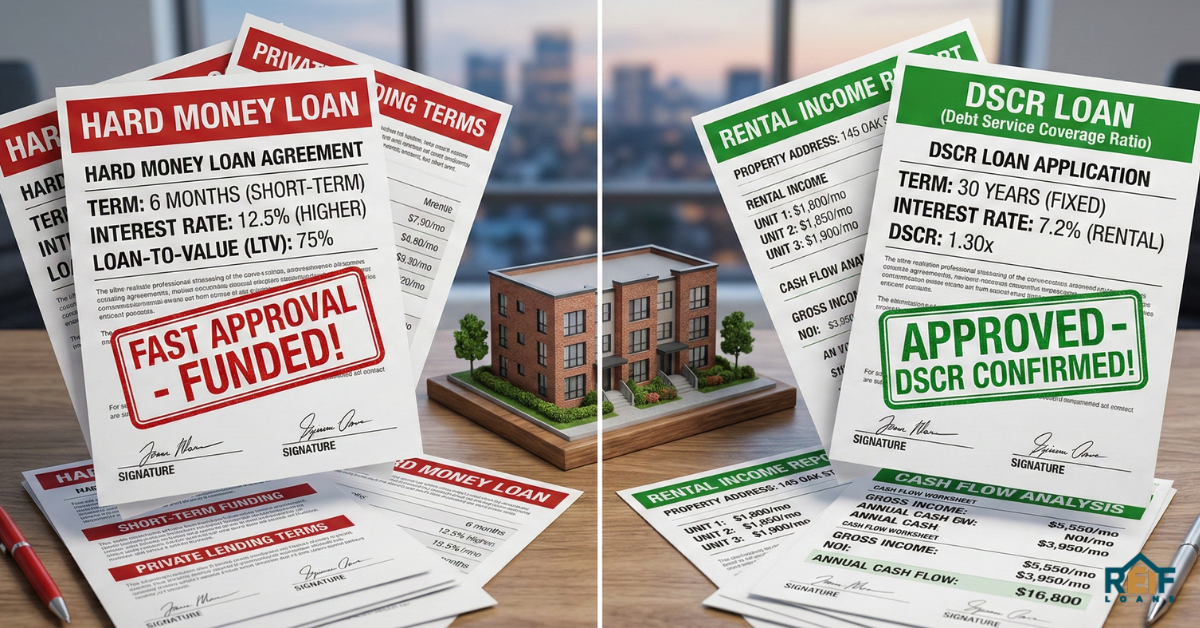
| Feature | Real Estate Property DSCR Loans | Hard Money Loan |
| Mortgage Term | 15 to 30 years | 6 to 24 months |
| Interest Rates | Lower, competitive rates | Higher (often 10% to 15%) |
| Qualification Basis | Property rental income (DSCR ratio) | Property value or after-repair value |
| Funding Speed | 2 to 4 weeks | As fast as 5 to 10 days |
| Income Verification | None required | None required |
| Best For | Buy-and-hold rental investors | Fix-and-flip or bridge deals |
What is a Real Estate Property DSCR Loans?
A Real Estate Property DSCR Loans is a type of non-QM mortgage that qualifies borrowers based on the property’s rental income rather than personal income documentation. DSCR stands for Debt Service Coverage Ratio, which measures whether the property generates enough rent to cover the monthly mortgage payment.
For example, if a rental property brings in $2,000 per month and the total monthly debt obligation is $1,600, the DSCR would be 1.25. Most lenders, including Real Estate Investor Friendly Loans, look for a DSCR of 1.0 or higher.
Who It’s Best For
- Long-term rental property investors building a portfolio
- Self-employed borrowers who have difficulty documenting income through traditional means
- Investors who want 30-year fixed-rate stability without handing over tax returns
- Anyone focused on cash flow driven strategies and passive income growth
For Example
You find a duplex that rents for $2,400 per month combined. After calculating insurance, taxes, and the projected mortgage payment, your DSCR comes out to 1.3. You qualify based on the property’s performance alone, not your W-2s. You close, tenants keep paying, and you hold the asset long term.
What is a Hard Money Loan?
A hard money mortgage is a short-term, asset-based mortgage typically funded by private lenders or specialized lending companies. Instead of looking at your income profile in detail, hard money lenders focus on the property’s current value or its after-repair value (ARV).
These mortgage are built for speed. When you need to close on a distressed property at auction or lock down a time-sensitive deal, hard money is often the fastest path to funding.
Who It’s Best For
- Fix-and-flip investors who plan to renovate and sell within 12 months
- Investors purchasing distressed or auction properties that need significant rehab
- Anyone needing bridge financing between deals
- Situations where closing speed matters more than long-term cost
For Example
You find a foreclosed single-family home listed well below market value. It needs $40,000 in repairs but the ARV is $220,000. A conventional lender would never touch it. A hard money mortgage from Real Estate Investor Friendly Loans can get you funded in under two weeks, giving you the capital to buy and renovate. Once the rehab is done, you sell for profit or refinance into a Real Estate Property DSCR Loans.
Differences Between Real Estate Property DSCR Loans and Hard Money Loans
While both mortgage types skip traditional income verification, they serve fundamentally different investment strategies.
Mortgage Purpose: Real Estate Property DSCR Loans are for acquiring or refinancing income-producing rental properties. Hard money loans are for short-term acquisitions, rehabs, and bridge situations where the property is not yet stabilized.
Mortgage Terms: Real Estate Property DSCR Loans come with 15 to 30 year structures. Hard money mortgage run 6 to 24 months with interest-only payments.
Cost: Real Estate Property DSCR Loans carry lower interest rates because they represent lower risk. Hard money mortgage have higher rates, typically 10% to 15%, reflecting the short-term risk and fast turnaround.
Benefits and Considerations
Real Estate Property DSCR Loans Benefits:
- No personal income documentation or tax returns required
- Long-term, predictable monthly payments
- Lower interest rates compared to hard money
- Scalable for building a rental portfolio across multiple properties
Hard Money Mortgage Benefits:
- Fast closing timelines, sometimes under 10 days
- Available for properties in poor condition that conventional lenders reject
- Flexible terms that can be negotiated with the lender
- No requirement for the property to be producing income at closing
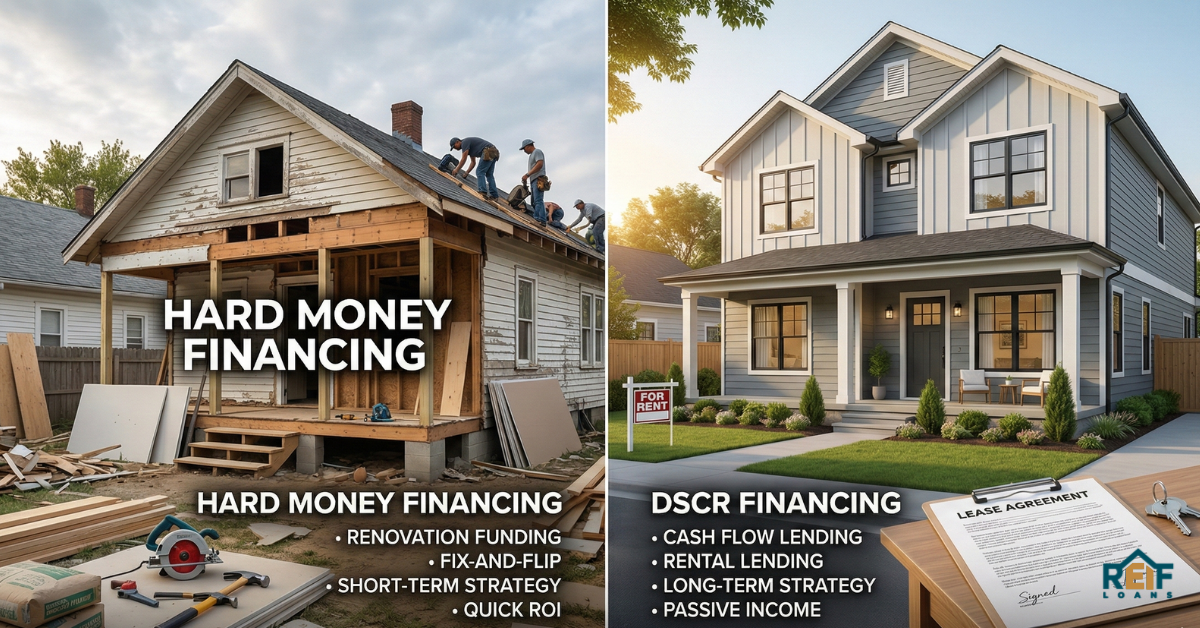
Hard Money Vs Real Estate Property DSCR Loans: How to Choose the Right One?
Which Mortgage Matches Your Investment Strategy?
Choose a Real Estate Property DSCR Loans If:
- The property is already rented or rent-ready
- You plan to hold the property for several years or longer
- You want stable financing without income documentation
- Cash flow and passive income are your primary goals
Choose a Hard Money Mortgage If:
- The property needs major renovation before it can generate income
- You plan to sell within 6 to 12 months
- Speed of closing is critical to winning the deal
- You have a clear exit strategy, either selling or refinancing
Which Loan Fits Your Financial Needs?
If keeping monthly costs low and building long-term equity matters most, a Real Estate Property DSCR Loans is the better fit. If you need quick capital and have a plan to exit within a year, hard money makes more sense. Many investors who work with Real Estate Investor Friendly Loans use both. They acquire and rehab with hard money, stabilize the property with tenants, then refinance into a Real Estate Property DSCR Loans. This is the core of the BRRRR strategy (Buy, Rehab, Rent, Refinance, Repeat).

How Do I Decide Between a Real Estate Property DSCR Loans and a Hard Money Loan?
The decision comes back to your deal and your strategy. If you are holding for cash flow, go DSCR. If you are flipping or bridging, go hard money. And if your strategy involves both stages, Real Estate Investor Friendly Loans can help you structure the financing from acquisition through long-term hold.
Founded by Elizabeth Shvartsman, Real Estate Investor Friendly Loans specializes in real estate investor mortgage, Real Estate Property DSCR mortgages, hard money mortgage, cash out refinance for investors, and commercial real estate mortgage across Michigan and 43 states. Whether you are buying your first rental or scaling a portfolio, Real Estate Investor Friendly Loans provides transparent lending, fast pre-qualification, and investor-first advisory to help you move forward with confidence.
FAQs
Can I get a Real Estate Property DSCR Loans with no rental history?
Yes. Real Estate Investor Friendly Loans and most DSCR lenders will use projected market rent based on an appraisal rather than requiring an existing lease.
Do hard money lenders check credit scores?
Some do, but credit score requirements are generally much more flexible than conventional financing. The primary focus is the property’s value and the deal itself.
Which loan has lower interest rates: DSCR or hard money loans?
Real Estate Property DSCR Loans consistently offer lower rates because they represent a longer-term, lower-risk investment for the lender.
How quickly can I get approved for a Real Estate Property DSCR Loans vs. a hard money loan?
Hard money loans can close in as few as 5 to 10 business days. Real Estate Property DSCR Loans typically take 2 to 4 weeks. Real Estate Investor Friendly Loans offers fast pre-qualification for both.
Can I refinance a hard money loan into a Real Estate Property DSCR Loans?
Absolutely. This is one of the most common strategies among experienced investors. Once a property is renovated and rented, refinancing through Real Estate Investor Friendly Loans gives you long-term stability at a lower rate.
Are Real Estate Property DSCR Loans available for short-term rentals like Airbnb?
Yes. Many DSCR lenders accept short-term rental income when calculating the coverage ratio. Projections may come from platforms like AirDNA or historical booking data.