


Choosing the right financing option can make or break your real estate investment strategy. For investors looking to grow their rental property portfolio, understanding the differences between DSCR vs conventional loans is essential before signing on the dotted line.
Both loan types serve real estate investors, but they work in fundamentally different ways. Your income situation, investment goals, and how quickly you want to scale will determine which option fits your needs best. This guide from REIF Loans breaks down everything you need to know to make a confident decision.
What is a DSCR Loan?
A DSCR loan, or Debt Service Coverage Ratio loan, qualifies borrowers based on the rental income a property generates rather than personal income. Lenders calculate the DSCR by dividing the property’s gross rental income by its total debt obligations, including the mortgage payment, taxes, and insurance.
Most lenders require a DSCR of 1.0 to 1.25, meaning the property’s income must cover 100% to 125% of its monthly expenses. This makes DSCR loans particularly attractive for self-employed investors or those who write off significant expenses on their tax returns.
Key features of DSCR loans include:
- No W-2 or personal income verification required
- Qualification based entirely on property cash flow
- Available for purchases through LLCs or business entities
- Works for both long-term rentals and short-term vacation properties
- Faster closing timelines compared to conventional financing
- No limit on the number of financed properties
What is a Conventional Loan for Investment Properties?
Conventional loans follow guidelines set by Fannie Mae and Freddie Mac, which means stricter documentation requirements. These loans evaluate your personal income, employment history, credit score, and debt-to-income ratio before approval.
For investment properties, conventional lenders typically require two years of tax returns, pay stubs, and proof of reserves. While the qualification process takes longer, investors often benefit from lower interest rates compared to alternative financing options.
Key features of conventional loans include:
- Lower interest rates for qualified borrowers
- Requires full income and employment documentation
- DTI ratio typically capped at 43% to 45%
- Minimum credit scores usually start at 620 to 680
- Down payments range from 15% to 25% for investment properties
- Limited to 10 financed properties per borrower

DSCR vs Conventional Loan: Side-by-Side Comparison
Understanding how these two loan types stack up against each other helps investors make smarter financing decisions. The table below highlights the most important differences.
| Factor | DSCR Loan | Conventional Loan |
| Qualification Basis | Property rental income | Personal income and DTI |
| Income Documentation | Not required | W-2s, tax returns, pay stubs |
| Typical Interest Rates | Higher (7% to 9%+) | Lower (6% to 8%) |
| Down Payment | 20% to 25% | 15% to 25% |
| Credit Score Minimum | 620 to 680 | 620 to 700 |
| Closing Timeline | 2 to 3 weeks | 30 to 45 days |
| Property Limit | Unlimited | 10 properties max |
| LLC Ownership | Yes | Limited options |
| Short-Term Rentals | Yes | Often restricted |
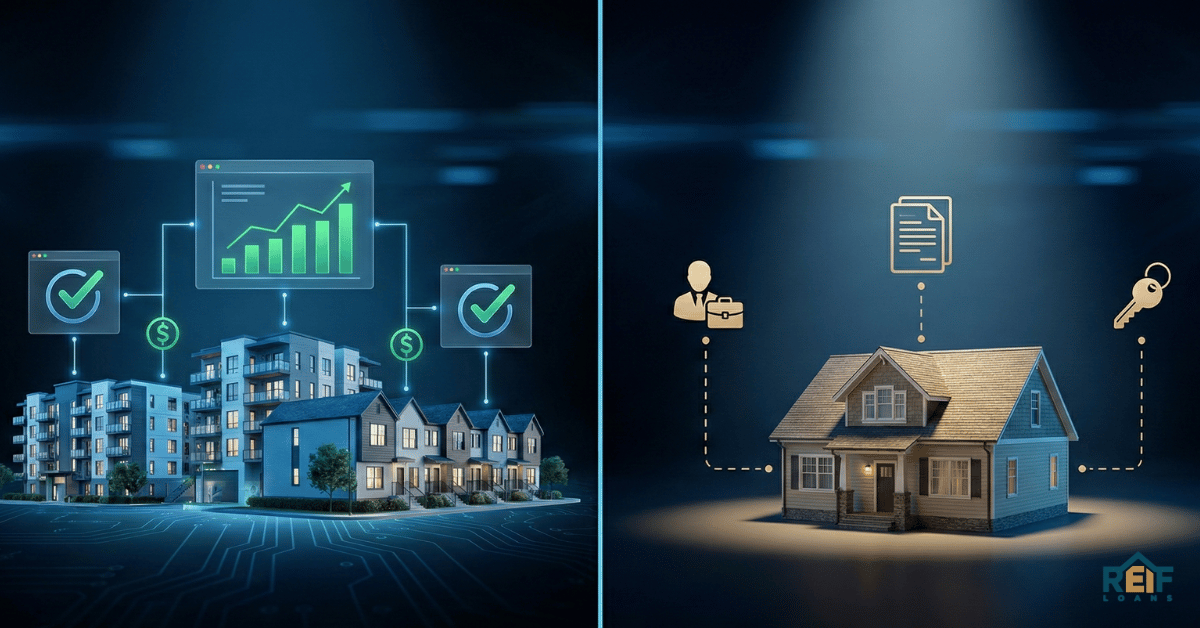
The comparison reveals a clear trade-off between flexibility and cost. DSCR loans offer more freedom, while conventional loans reward strong personal financials with better rates.
When to Choose a DSCR Loan
DSCR loans work best for investors whose personal income documentation does not reflect their true financial strength. If you are self-employed, own multiple businesses, or take significant tax deductions, your tax returns may show lower income than what you actually earn.
This loan type also makes sense when you want to scale quickly. Since there is no cap on the number of DSCR loans you can hold, investors building larger portfolios often prefer this route.
Consider a DSCR loan if you:
- Are self-employed with complex tax returns
- Want to purchase investment property through an LLC
- Have already reached the 10-property conventional loan limit
- Need a faster closing timeline for competitive deals
- Plan to invest in short-term rentals or Airbnb properties
- Prefer qualification based on the deal itself, not your job
When to Choose a Conventional Loan
Conventional loans remain the go-to choice for W-2 employees with straightforward income documentation. If you can easily prove your earnings and have a strong debt-to-income ratio, you will likely qualify for better interest rates with conventional financing.
First-time investors purchasing their initial rental properties often start with conventional loans before transitioning to DSCR options later. The savings on interest can add up significantly over the life of a 30-year mortgage.
Consider a conventional loan if you:
- Have stable W-2 employment with documented income
- Are purchasing your first one to four investment properties
- Want the lowest possible interest rate
- Have excellent credit and low existing debt
- Do not mind a longer approval and closing process

Building a Portfolio: Which Loan Supports Long-Term Growth?
Many successful investors use both loan types at different stages of their journey. Starting with conventional loans helps secure lower rates on your first few properties, while DSCR loans allow you to keep scaling once you hit conventional lending limits.
The 10-property cap on conventional financing creates a ceiling that active investors reach faster than expected. At that point, DSCR loans become essential for continued portfolio growth without relying on personal income documentation.
How REIF Loans Helps Investors Find the Right Fit
REIF Loans specializes in DSCR loans and real estate investor financing across Michigan and 43 states. Founded by Elizabeth Shvartsman, the company takes an investor-first approach to help clients match their financing with their specific goals.
Whether you need rental property financing for a single-family home or commercial real estate loans for a larger project, REIF Loans provides transparent lending with fast pre-qualification. The team understands that every investor’s situation is different, which is why personalized advisory matters.
Final Thoughts
Neither DSCR nor conventional loans are universally better. The right choice depends on your income documentation, how many properties you already own, and how quickly you want to grow your portfolio.
DSCR loans offer flexibility and speed for investors who want to qualify based on property performance. Conventional loans deliver lower rates for those with strong personal financials and straightforward documentation. Many investors find success using both over time.
Ready to explore your options? Contact REIF Loans today to discuss which financing path aligns with your investment strategy.