If you have ever tried to finance a rental property using a traditional mortgage, you know how frustrating the process can be. Lenders want to see W-2s, tax returns, and debt-to-income ratios that make sense on paper. But for real estate investors, especially those who are self-employed or own multiple properties, the numbers rarely tell the full story.
What is a DSCR Loan?
That is where real estate property DSCR Loans come in. These investment property mortgages focus on what actually matters: whether the rental income covers the mortgage payment. For investors building portfolios across Michigan and beyond, understanding Real Estate Property DSCR Loans could change how you approach your next deal.
How Real Estate Property DSCR Loans Work
A Real Estate Property DSCR loan or Debt Service Coverage Ratio mortgage qualifies borrowers based on the cash flow of the investment property rather than personal income. Instead of digging through your tax returns, lenders look at one simple question: Does this property make enough money to pay for itself?
The formula is straightforward. Take the property’s net operating income and divide it by the total debt service (your monthly mortgage payment including principal, interest, taxes, and insurance). If the result is 1.0 or higher, the property breaks even. Most lenders want to see a DSCR of at least 1.0 to 1.25, meaning the rental income exceeds the mortgage payment by a comfortable margin.
Real Estate Property DSCR Loans Requirements
Every lender has slightly different criteria, but most real estate property DSCR Loans share common requirements. Knowing what to expect helps you prepare before you start the application process.
Credit Score Minimums
Most lenders require a minimum credit score between 620 and 680 for real estate property DSCR Loans. Your score also affects the interest rate you receive. Higher scores typically mean better terms and lower rates, so it pays to check your credit before applying.
Down Payment and LTV
Expect to put down 20% to 25% on a Real Estate Property DSCR Loan. Loan-to-value ratios usually cap around 75% to 80%, which means you need real skin in the game. This protects the lender and shows you are serious about the investment.
Property Types That Qualify
Real Estate Property DSCR Loans work for a variety of rental properties, giving investors flexibility in their strategy:
- Single-family rental homes
- Duplexes, triplexes, and fourplexes
- Small commercial real estate properties
- Short-term rentals and vacation properties (with some lenders)
- Condos and townhomes in investor-friendly communities
Documentation You Will Need
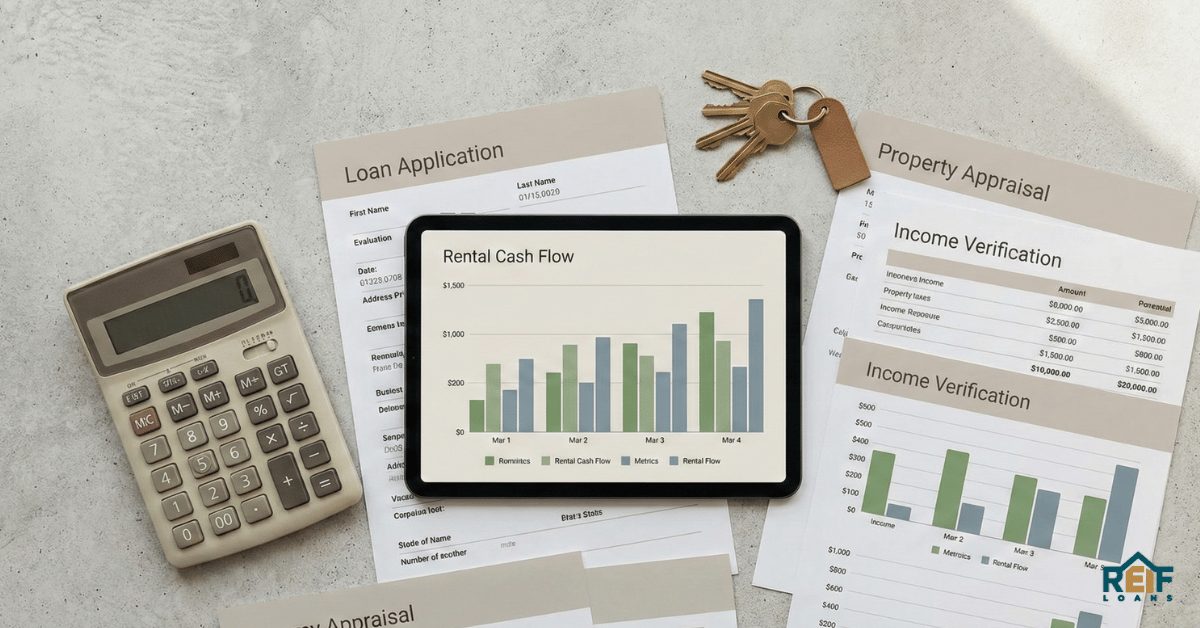
One of the biggest advantages of real estate property DSCR Loans is the reduced paperwork. Here is what most lenders require:
- Current lease agreement or rent roll
- Property appraisal with rental income analysis
- Bank statements (typically 2 to 3 months)
- Entity documents if purchasing through an LLC
- Insurance quotes and property tax estimates

Benefits of DSCR Loans for Real Estate Investors
For serious investors, Real Estate Property DSCR Loans solve problems that traditional financing cannot. The qualification process focuses entirely on the deal itself, which opens doors that would otherwise stay closed.
Self-employed investors often struggle with a conventional mortgage because their tax returns show minimal income after deductions. Real Estate Property DSCR Loans sidestep this issue completely. Your personal income simply does not factor into the equation.
Here are the key advantages that make Real Estate Property DSCR Loans popular among portfolio builders:
- No personal income verification or W-2 requirements
- No limit on the number of financed properties you can own
- Faster approval and closing timelines
- Ability to close in an LLC or business entity
- Works well with buy-and-hold and BRRRR strategies
- Ideal for scaling a rental portfolio quickly
Real Estate Property DSCR Loans vs. Traditional Investment Property Loans
Understanding the difference between Real Estate Property DSCR Loans and conventional investment property mortgage helps you choose the right financing for your situation.
Traditional loans require full income documentation, including tax returns, pay stubs, and a favorable debt-to-income ratio. Lenders also limit how many financed properties you can have, usually capping at 10. The approval process takes longer and involves more back-and-forth with underwriters.
Real Estate Property DSCR Loans flip the script. Qualification depends on the property’s income potential, not yours. There are no limits on how many properties you can finance, and the process moves faster because there is less documentation to review. For investors focused on cash flow and portfolio growth, Real Estate Property DSCR Loans often make more sense.
Who Should Consider a Real Estate Property DSCR Loan?
Real Estate Property DSCR Loans are not for everyone, but they work exceptionally well for certain types of investors. If any of these descriptions fit your situation, this financing option deserves a closer look.
- Self-employed investors with complex tax returns
- Real estate professionals with multiple rental properties
- Investors who want to close quickly on time-sensitive deals
- Those purchasing through an LLC for liability protection
- Buyers focused on cash-flowing rental properties

Potential Drawbacks to Consider
No mortgage product is perfect, and Real Estate Property DSCR Loans have some trade-offs worth mentioning. Interest rates tend to run higher than conventional mortgages, sometimes by 0.5% to 1.5% depending on the lender and your credit profile.
Down payment requirements are also steeper. If you are used to putting 15% down on investment properties with conventional financing, the jump to 20% or 25% requires more capital upfront. Some Real Estate Property DSCR Loans also include prepayment penalties, so read the terms carefully if you plan to refinance or sell within a few years.
How to Apply for a Real Estate Property DSCR Loans
Getting started with a Real Estate Property DSCR loan is simpler than most investors expect. The process moves quickly when you work with a lender who specializes in real estate investor loans.
Follow these steps to get your application moving:
- Calculate your target property’s potential DSCR using estimated rents and expenses
- Gather lease agreements, property details, and basic financial documents
- Connect with a lender experienced in rental property financing
- Complete a pre-qualification to understand your buying power
- Submit your full application and move toward closing
At Real Estate Investor Friendly Loans, the team specializes in Real Estate Property DSCR Loans and investment property financing for investors across Michigan and 43 states. With fast pre-qualification and transparent lending practices, Real Estate Investor Friendly Loans help investors secure the financing they need to grow their portfolios with confidence.
Final Thoughts
Real Estate Property DSCR Loans have become a go-to financing option for real estate investors who want to qualify based on property performance rather than personal income. Whether you are buying your second rental or your twentieth, this mortgage type offers flexibility, speed, and fewer documentation headaches.
If you are ready to explore DSCR financing for your next investment property, reach out to Real Estate Investor Friendly Loans to discuss your options and get pre-qualified today.